Bonneville Power Administration
The Bonneville Power Administration (BPA) is a federal nonprofit agency based in the Pacific Northwest. BPA markets wholesale electrical power from 31 federal hydro projects in the Columbia River Basin, one non-federal nuclear plant in Washington state and several other non-federal power plants. About one-third of the electric power used in the Northwest comes from BPA, and the majority of the power used in Idaho Falls is purchased from BPA.
Operations
In addition to its generation assets, BPA operates and maintains the majority of the high-voltage transmission in its service territory and promotes energy efficiency, renewable resources and new technologies to the region's utilities. BPA also funds regional efforts to protect and rebuild fish and wildlife populations affected by federal hydropower facilities in the basin. About 15 percent of the energy charges on an Idaho Falls Power bill are earmarked for these mitigation efforts.
Additional Information
To learn more about the Bonneville Power Administration, visit the BPA website.
Peaking Plant
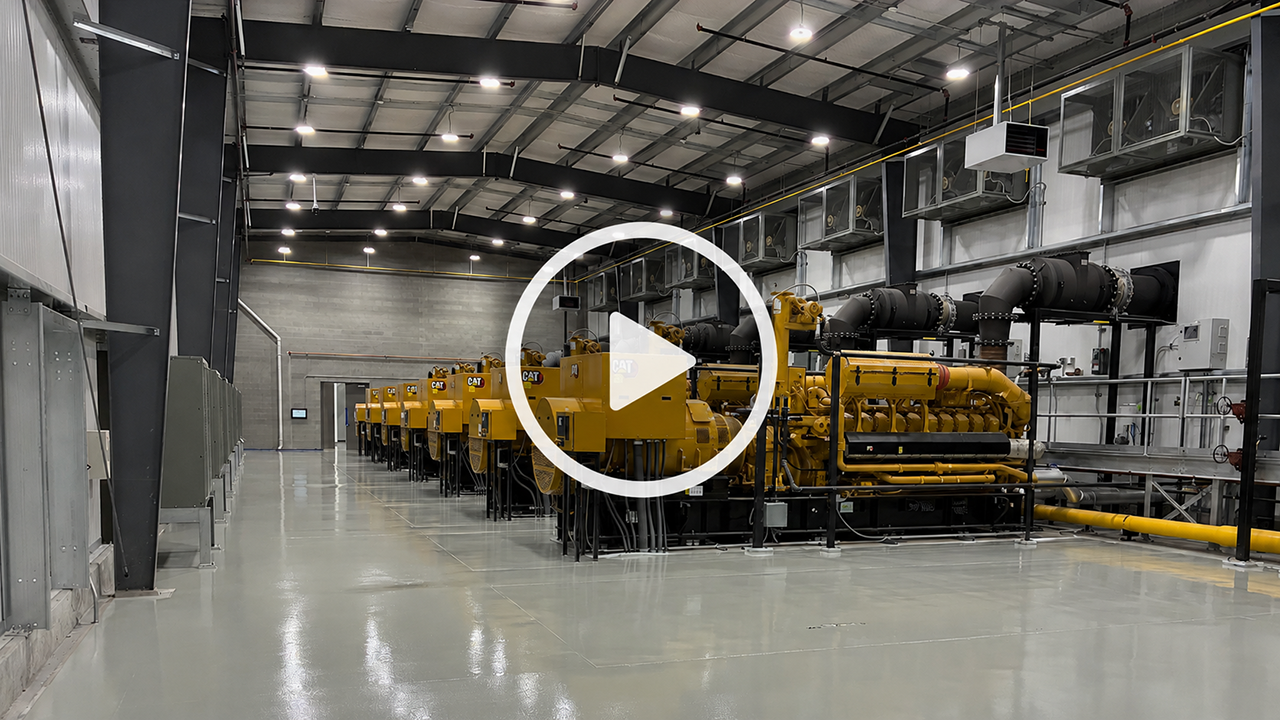
Idaho Falls Power's natural gas peaking plant went online in December 2025. The new facility reflects the city's continued commitment to innovation, fiscal responsibility, and low electricity rates.
The $36 million plant adds 17.5 megawatts of on-demand local power. The City Council, serving as the utility's governing board, approved the construction contract in early 2024.
Built to supply power during peak demand, such as the hottest summer days and coldest winter nights, the plant allows IFP to generate electricity locally when wholesale market prices would otherwise rise sharply. "With this additional capacity, IFP can reduce its reliance on external market purchases during critical times, strengthening local control and price stability for our community and be part of the solution for regional capacity concerns," said Interim General Manager Stephen Boorman.
A key purpose of the plant is to help shield ratepayers from volatile power-market prices. Because Idaho Falls Power operates its own hydropower system and is adding local generation capacity, residential customers pay about 7 cents per kilowatt-hour—roughly 50 percent below the U.S. average. Generating more of its own electricity also helps the utility keep monthly rates stable and predictable.
Idaho Falls Power already operates four dams on the Snake River, which provide about one-third of the city's energy needs. As population and commercial activity grow—and winter river flows fluctuate—the new plant helps meet rising demand while preserving space for future research and a substation if needed.
The seven Caterpillar (CAT©) generators currently run on natural gas and were selected for their cost-effectiveness and lower emissions. They are also designed to operate on lower-carbon hydrogen fuel blends once those options become commercially viable. IFP worked closely with the Idaho Department of Environmental Quality to meet regulatory requirements, investing significant time and resources in advanced emissions systems expected to keep emissions well below allowable limits while allowing room for future expansion. "Providing for low emissions and ensuring minimal environmental impact were important factors in securing unanimous Council support the project," said Boorman.
Project funding was secured through an agreement with the Idaho Energy Resource Authority (IERA), with terms designed to repay the investment in about 15 years and protect ratepayer interests. "IERA was able to secure our revenue bond at an incredibly low rate (3.27%), ultimately saving us millions of dollars over the duration of the loan," said Josh Roos, Chief Financial Officer. Favorable borrowing terms lower long-term costs for IFP customers while supporting grid reliability and energy independence.
This investment reinforces Idaho Falls Power's commitment to reliable service, smart infrastructure, and low-cost power for its customers.
Hydropower Projects
The City of Idaho Falls has operated a municipal electric generation system since 1900, when a small generator was installed in an irrigation canal to create electricity for street lights. Today the City owns and operates five hydropower plants along the Snake River, providing on average about one-third of the electricity used in the City. Most of the balance is purchased from the Bonneville Power Administration, a federal agency that markets electricity generated at 31 hydro facilities along the Columbia and Snake rivers, along with one nuclear plant.
Current System
The City's hydropower system is composed of two main projects - the Bulb Turbine Project and the Gem State Project. The Bulb Turbine project replaced or augmented three hydroelectric facilities constructed along the Snake River between 1912 and 1940. The plants at the original Upper and City sites were destroyed by the Teton Dam collapse and flood in 1976 and required replacement. The Old Lower Plant facility did not sustain as much damage and was retained. The new bulb turbine facility was constructed adjacent to it.
Bulb Turbine Project
Construction of these three plants - the Upper, City and Lower plants - began in 1978 and was completed in 1982. The Bulb Turbine Project was one of the first in the United States to use the European technology of placing the turbine-generator entirely within a horizontal water passage. The generator is enclosed in a water-tight seal or "bulb" and connected to a downstream runner by a horizontal shaft. The advantage of using this technology over the more common vertical-shaft turbines, is that it better utilizes the relatively low-head (water height) in the stretch of the river around Idaho Falls.
The available head at each of the three sites is approximately 19 feet, which is low compared to most utility-scale hydroelectric projects. Each of the three plants channels up to 6,000 cubic feet per second of water through the turbines to produce up to 8 megawatts of energy each. The total production from the three plants sites produces approximately 100 million kilowatt-hours of electricity annually.
Gem State
The Gem State Plant is nearly as large as the Bulb Turbine Plants combined. It was constructed at an abandoned hydroelectric site about five miles south of the City. Construction began in 1985 and the plant was completed in 1988.
The powerhouse contains one vertical Kaplan Turbine with an installed capacity of 22.6 megawatts operating under a 43 foot head. Its 40 foot high, 3600 foot long earth-fill dam, impounds a reservoir of 5,000 acre-feet with a surface area of 305 acres. Gem Lake, as it's known, has become a popular area for fishing and boating for area residents. The plant produces approximately 120 million kilowatt-hours of electricity annually.
Additional Information
For more information about hydropower, visit the Foundation for Water and Energy Education's website.
Power Portfolio
Idaho Falls Power owns and operates 5 hydroelectric projects along the Snake River, the utility owns a portion of the Horse Butte Wind project, and Idaho Falls Power operates a small solar installation at our location on S. Capital Avenue. Together, these projects produce enough electricity to meet 31.54% of the City's electric requirements. The remainder of the electric requirements are met through long-term contracts with Bonneville Power Administration (BPA) and short-term market purchases. Roughly 63.13% of the electric requirements, for the City of Idaho Falls, are met through long-term contracts with BPA. The remaining 5.34% of the City's electric requirements are met through short-term market purchases.
Overall, hydroelectric production accounts for 78.06% of the City's electric requirements, with 94.66% of the electric requirements being met by hydro, wind, solar, and nuclear power. About 5.34% of the City's electricity comes from unspecified market purchases.
IFP Generation by Resource Type, FY 2024
| Resource Type |
MWh |
Percent of Portfolio |
| Hydro |
236,852 |
96.743% |
| Wind |
7,970 |
3.255% |
| Solar |
2.92 |
0.002% |
| Total |
244,824.92 |
100% |
IFP Owned Vs Purchased Generation by Resource Type, FY 2024
| Resource Type |
IFP Owned |
Long-Term Contracts |
Short-Term Purchases |
Total |
| Hydro |
29.82% |
48.24% |
- |
78.06% |
| Wind |
1.05% |
5.57% |
- |
6.62% |
| Nuclear |
- |
8.65% |
- |
8.65% |
| Solar |
0.67% |
0.67% |
- |
1.33% |
| Unspecified Market Purchases |
- |
- |
5.34% |
5.34% |
| Total |
31.54% |
63.13% |
5.34% |
100% |